Real Estate Drone Photography Rules for 2027
Aerial photos sell the lot, the street and the view. Before your 2027 listing shoots, here are the FAA rules for agents who fly themselves or hire a pilot.
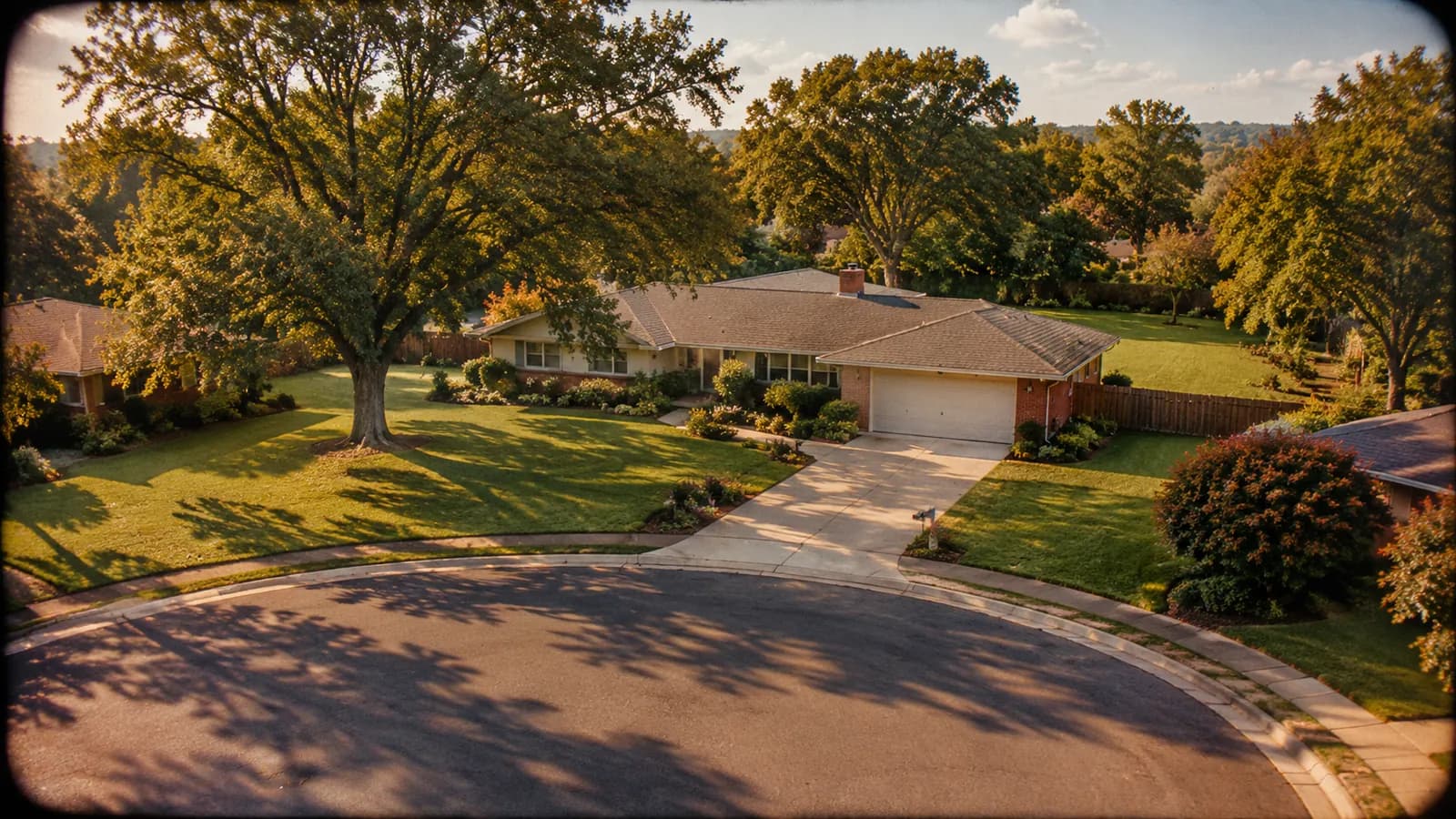
Aerial photography can show buyers something ground-level listing photos cannot: how a property sits within its neighbourhood.
But before you arrange a drone shoot for your next listing, there is something worth checking beyond the weather and the photographer's availability: FAA compliance.
Real estate drone photography for business purposes falls under the FAA's Part 107 rules. Whether you fly the drone yourself or hire a professional, the shoot needs to account for pilot certification, drone registration, Remote ID, airspace restrictions and rules about flying near people. Here are the FAA drone rules for realtors and small teams planning drone photography for real estate listings in 2027.
Why Do Real Estate Drone Shoots Need an FAA Rules Check?
The FAA generally treats drone flights conducted for work or business as commercial operations under Part 107. In practice, Part 107 real estate compliance is the starting point for every listing shoot. That includes taking aerial photographs for your own property listings, even if you are not charging a separate photography fee.
This distinction matters because the recreational or hobby-flying rules do not cover business-related listing photography.
Under Part 107, the rules apply to small unmanned aircraft weighing less than 55 pounds, including their attached equipment.
For a real estate agent, that means:
- Taking aerial photographs of a property you represent is a business activity.
- Creating drone footage for a listing advertisement is a business activity.
- Hiring someone to produce aerial listing media does not remove the need to check that the operation is properly conducted.
- A recreational drone flight exemption is not a substitute for commercial operating requirements.
The FAA's Commercial Operators guidance explains the framework.
The practical takeaway: decide early whether your team will use its own certified remote pilot or hire a qualified drone operator. Build compliance into the listing-media process rather than treating it as a last-minute check.
What Do You Need to Fly a Drone Yourself for Real Estate?
If you want to capture listing footage yourself, you generally need an FAA Remote Pilot Certificate under Part 107.
According to the FAA, an applicant must:
- Be at least 16 years old.
- Be able to read, write, speak and understand English.
- Be physically and mentally fit to operate a drone safely.
- Pass the Unmanned Aircraft General – Small (UAG) aeronautical knowledge test.
Once certified, there are ongoing responsibilities.
Your certificate is not a one-time qualification. Remote Pilot Certificate holders must complete FAA online recurrent training every 24 calendar months to maintain their aeronautical knowledge currency.
You should also:
Register your drone. Register it with the FAA under Part 107 and mark the aircraft with its registration number.
Carry your certificate. Keep your Remote Pilot Certificate accessible when operating the drone. The FAA explains the certificate requirements in its Become a Drone Pilot guidance.
What Is Remote ID, and Does Your Listing Drone Need It?
Think of it as a way for a drone to broadcast identification and location information during flight. It helps the FAA and other relevant authorities identify drones operating in US airspace.
Since September 16, 2023, drones that require FAA registration generally must comply with Remote ID requirements.
There is an exception for aircraft operated within an FAA-recognized identification area, commonly called a FRIA.
For a real estate agent, the practical point is straightforward: if your drone requires FAA registration, you should also verify that it meets the applicable Remote ID requirements before scheduling a listing shoot.
The FAA provides further details, including the applicable exceptions, in its Remote ID overview.
Planning a more consistent listing-marketing process? Book a strategy call to discuss how RealtyCTL can help connect your listing content, marketing and lead-generation workflows.
Can You Fly a Drone Near an Airport, Over People or at Night?
A property may look like an ordinary suburban listing, but its location could put it inside controlled airspace near an airport.
Understanding LAANC authorization
LAANC stands for Low Altitude Authorization and Notification Capability.
It allows eligible drone pilots to obtain near-real-time authorization to access controlled airspace at or below 400 feet, subject to the applicable restrictions and available authorization limits.
The pilot should check the airspace before the appointment and obtain the required authorization where applicable.
The FAA explains the process through its LAANC guidance.
Flying at night and around people
The FAA's Operations Over People rule became effective on April 21, 2021.
It allows qualifying Part 107 operations at night, over people and over moving vehicles without a waiver, provided the operation meets the applicable requirements.
However, this does not mean every drone can fly over an open house, a busy street or a group of visitors.
There is another important distinction: night operations in controlled airspace still require the applicable airspace authorization.
State and local laws may also apply, including privacy requirements and local park restrictions, so agents should check the rules relevant to the property and planned flight.
A practical compliance reference
| Situation | FAA rule that applies | What to do before the shoot | Source |
|---|---|---|---|
| Agent flies own listing | Part 107 commercial operation | Confirm Remote Pilot Certificate, aircraft registration and operational compliance | FAA Part 107 |
| Hiring a pilot | Part 107 applies to the commercial flight | Verify the pilot's current certificate and aircraft compliance | FAA Pilot Requirements |
| Listing near an airport | Controlled-airspace authorization may be required | Check airspace and obtain LAANC authorization where available and required | FAA LAANC |
| Twilight/night exterior | Part 107 night-operation requirements | Confirm night-flight compliance and controlled-airspace authorization where required | FAA Part 107 |
| Open house with people on site | Operations Over People requirements | Determine whether the proposed flight qualifies and plan to keep people outside the operating area when necessary | FAA Part 107 |
| Drone needs registration | Remote ID requirements generally apply | Verify compliant Remote ID operation or an applicable FRIA exception | FAA Remote ID |
The important habit is to check the specific property, not rely on what was permitted at your previous listing.
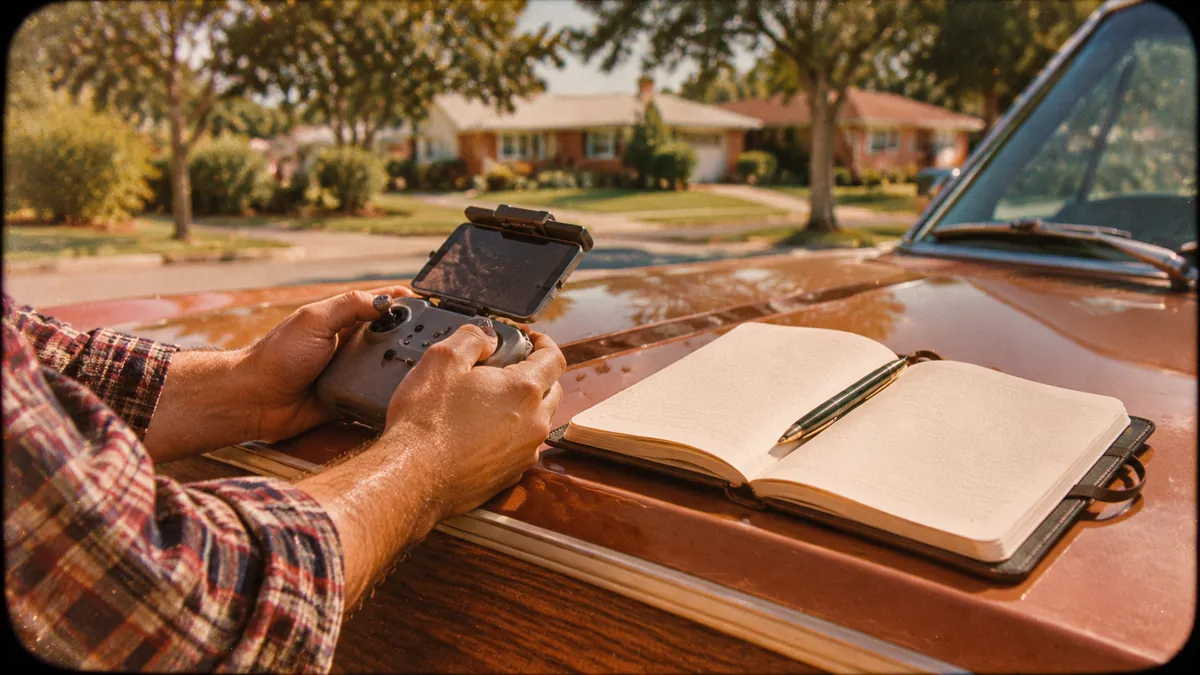
A pre-flight review helps ensure the property, airspace and planned drone operation are ready before the shoot.
What Should Real Estate Agents Ask Before Hiring a Drone Pilot?
1. Do you hold a current FAA Remote Pilot Certificate?
Ask the operator to confirm their Part 107 qualification. You should know who is responsible for the flight.
2. Is your drone registered and Remote ID compliant?
Ask whether the aircraft being used meets the applicable registration and Remote ID requirements.
3. Who checks the airspace?
Establish who checks the property's airspace classification and whether LAANC authorization or another approval is needed.
Ideally, the pilot handles the technical airspace process and confirms that the operation is authorized before arrival.
4. Do you carry insurance?
Ask whether the operator has appropriate insurance for the work. Do not assume that every independent drone photographer has the same coverage.
5. Who owns the photographs and video, and who can reuse them?
Put ownership and permitted reuse in writing. This matters if you want to use the footage across your MLS listing, website, social media accounts, future campaigns or other marketing materials.
6. What files will you deliver?
Discuss the delivery requirements before the shoot.
For example:
- High-resolution aerial photographs for listing materials.
- Landscape video suitable for a property website.
- Short vertical clips for Instagram Reels and other social platforms.
- Files suitable for your listing presentation and marketing archive.
The deliverables should fit the channels where your team actually markets properties.
How Can You Market Aerial Property Photos Without Misleading Buyers?
Aerial photography gives agents more room to tell a property's story, but it also creates opportunities to unintentionally misrepresent the property.
The goal should be to make the listing clearer, not make the property appear different from reality.
For example, avoid:
- Removing power lines that are visible in the actual property surroundings.
- Editing out neighbouring buildings to make a property appear more isolated.
- Adding a swimming pool, landscaping or other features that do not exist.
- Changing the apparent boundaries or surroundings of the property.
- Using angles or edits that create a materially misleading impression of the lot or its location.
Basic colour correction, exposure adjustments and reasonable image cleanup are different from changing what buyers are being shown.
The same principle applies to other digitally enhanced listing materials. If your team uses virtual staging, establish a consistent disclosure process. See our guide to virtual staging disclosure.
For REALTORS®, there is also an established professional standard to consider. Article 12 of the NAR Code of Ethics requires REALTORS® to present a true picture in their advertising and marketing.
Aerial content should help buyers understand the property and its surroundings, not create expectations that the actual property cannot meet.
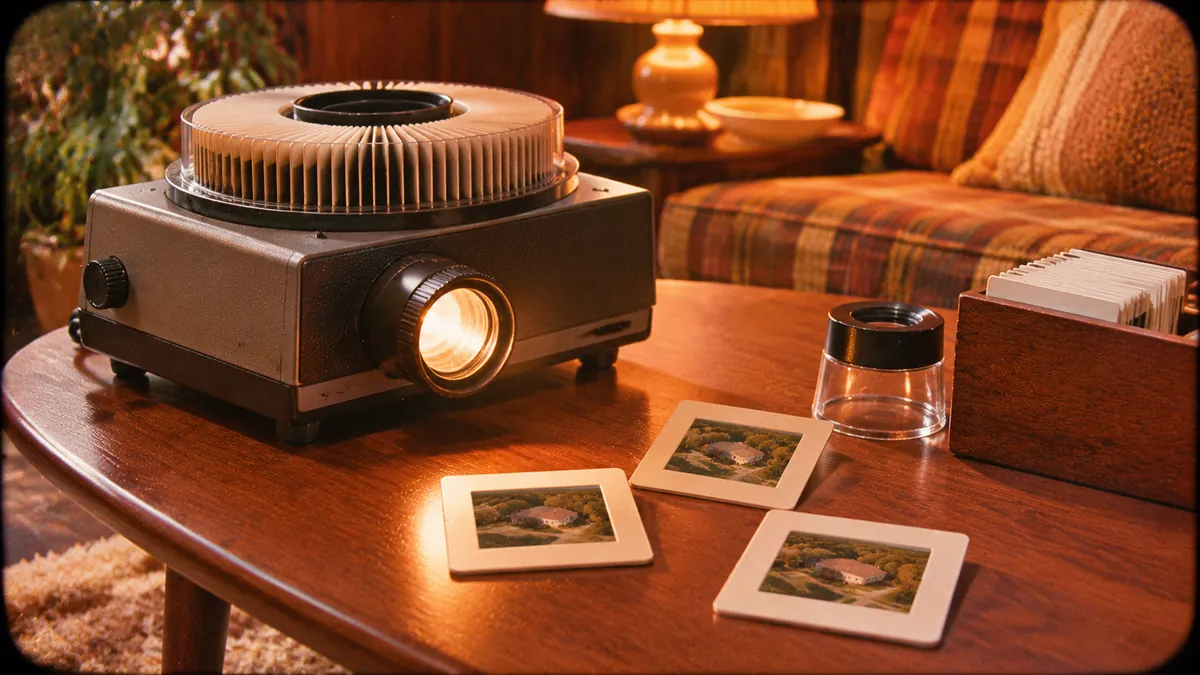
Reviewing aerial photographs carefully helps keep listing imagery accurate and representative of the property.
What Is Changing for Drone Photography in 2027?
You may encounter discussions about Part 108 when researching future commercial drone regulations.
The FAA has proposed a separate framework for beyond-visual-line-of-sight (BVLOS) operations.
BVLOS refers to drone operations where the remote pilot cannot maintain the required visual line of sight with the aircraft.
The proposed Part 108 rule was published in the Federal Register on August 7, 2025. Its public comment period closed on October 6, 2025.
However, as of November 17, 2026, no final Part 108 rule has been published in the Federal Register.
A proposed rule is not an effective regulation. Real estate agents should not assume that Part 108 has replaced or changed the current Part 107 requirements.
For ordinary listing photography in 2027, plan around the Part 107 framework already in force.
Keep an eye on the FAA's proposed BVLOS rule in the Federal Register for future developments.
How Should You Plan a Drone Photography Shoot for a 2027 Listing?
Once you have selected a qualified pilot and checked the relevant requirements, the next step is building a useful shot plan.
Every aerial shot should help prospective buyers understand something about the property.
Start with a short aerial shot list
For a typical residential listing, consider the following:
1. Property overview
Capture the property from above to show its position, roofline, backyard and general layout.
If lot boundaries are important, use an accurate property survey or other reliable information rather than presenting an approximate aerial angle as an exact boundary.
2. Street context
Show how the home sits within its street. This can help buyers understand the property's immediate surroundings.
3. Neighbourhood context
Capture nearby amenities only when their location and relationship to the property can be represented accurately.
Do not use an aerial angle to imply that a distant facility is directly adjacent to the home.
4. Exterior at twilight
If the location, airspace and operating conditions permit, consider a twilight exterior shot. This can provide a different perspective from daytime listing photography.
The pilot must confirm that any night operation satisfies the applicable FAA requirements.
Turn the footage into a wider marketing workflow
The value of the shoot should not end when the photographer sends the files.
A well-organised listing-media workflow can repurpose the same approved aerial footage into several marketing assets.
For example:
- Use selected aerial photographs in the property listing.
- Incorporate a few establishing shots into the main property video.
- Create short vertical clips for Instagram Reels and other social platforms.
- Include neighbourhood context in relevant listing campaigns.
- Keep the original files organised for future authorised marketing use.
This is where consistent real estate social media marketing and real estate content marketing can help your team get more value from each listing-media production cycle.
Your pre-shoot checklist
Before approving a 2027 listing shoot, run through this checklist:
- [ ] Decide whether your team or a hired pilot will conduct the flight.
- [ ] Verify the Remote Pilot Certificate if the flight is conducted by a hired or in-house pilot.
- [ ] Confirm that the pilot has completed the required recurrent training.
- [ ] Verify the drone's FAA registration and registration marking.
- [ ] Confirm Remote ID compliance or an applicable FRIA exception.
- [ ] Check the property's airspace and obtain required authorization, including LAANC where applicable.
- [ ] Confirm night-operation and Operations Over People requirements if relevant.
- [ ] Check applicable local restrictions and discuss insurance with the operator.
- [ ] Put image ownership and reuse permissions in writing.
- [ ] Agree on the shot list, delivery formats and a truthful editing standard.
This article provides general information, not legal advice. FAA requirements and guidance can change, so check current FAA guidance before each shoot.
Ready to plan your 2027 listing media?
Drone photography is one part of a broader real estate marketing system. The next step is making sure your listing images, videos, social content and lead-generation activities work together. At RealtyCTL, we help real estate agents and loan officers build practical marketing systems that support consistent visibility, content production and lead generation.
Book a strategy call to review your listing marketing workflow for 2027.
FAQ
Do real estate agents need a license to fly a drone for listings?
Yes. If you personally operate a drone for commercial real estate photography, you generally need an FAA Remote Pilot Certificate under Part 107. You must pass the UAG aeronautical knowledge test and meet the FAA's eligibility requirements. You also need to comply with aircraft registration, Remote ID, airspace and applicable operating rules.
What is Remote ID, and does my drone need it?
Remote ID allows a drone to broadcast identification and location information during flight. Since September 16, 2023, drones requiring FAA registration generally must comply with Remote ID requirements. An exception applies to operations within an FAA-recognized identification area (FRIA). Check the FAA's current guidance to confirm which requirements apply to your aircraft and operation.
Can a drone pilot fly near an airport for a listing shoot?
Potentially, yes, but controlled airspace requires appropriate authorization. LAANC provides near-real-time authorization for eligible operations at or below 400 feet, subject to applicable restrictions. Your pilot should check the property's airspace before the shoot and obtain the necessary authorization. Never assume that a low-altitude flight is automatically permitted near an airport.
Can I edit drone photos of a listing?
Yes, reasonable editing such as exposure, colour correction and cropping can improve listing photographs. However, editing should not create a misleading impression of the property. Avoid removing neighbouring buildings or power lines, adding features that do not exist, or changing the apparent property surroundings. REALTORS® should also follow Article 12 of the NAR Code of Ethics when advertising properties.