
Mortgage Broker Website Design for Better Conversions
Grow your lending business with Mortgage Broker Website Design focused on trust, fast performance, strong SEO, and more qualified inquiries. Get started today.
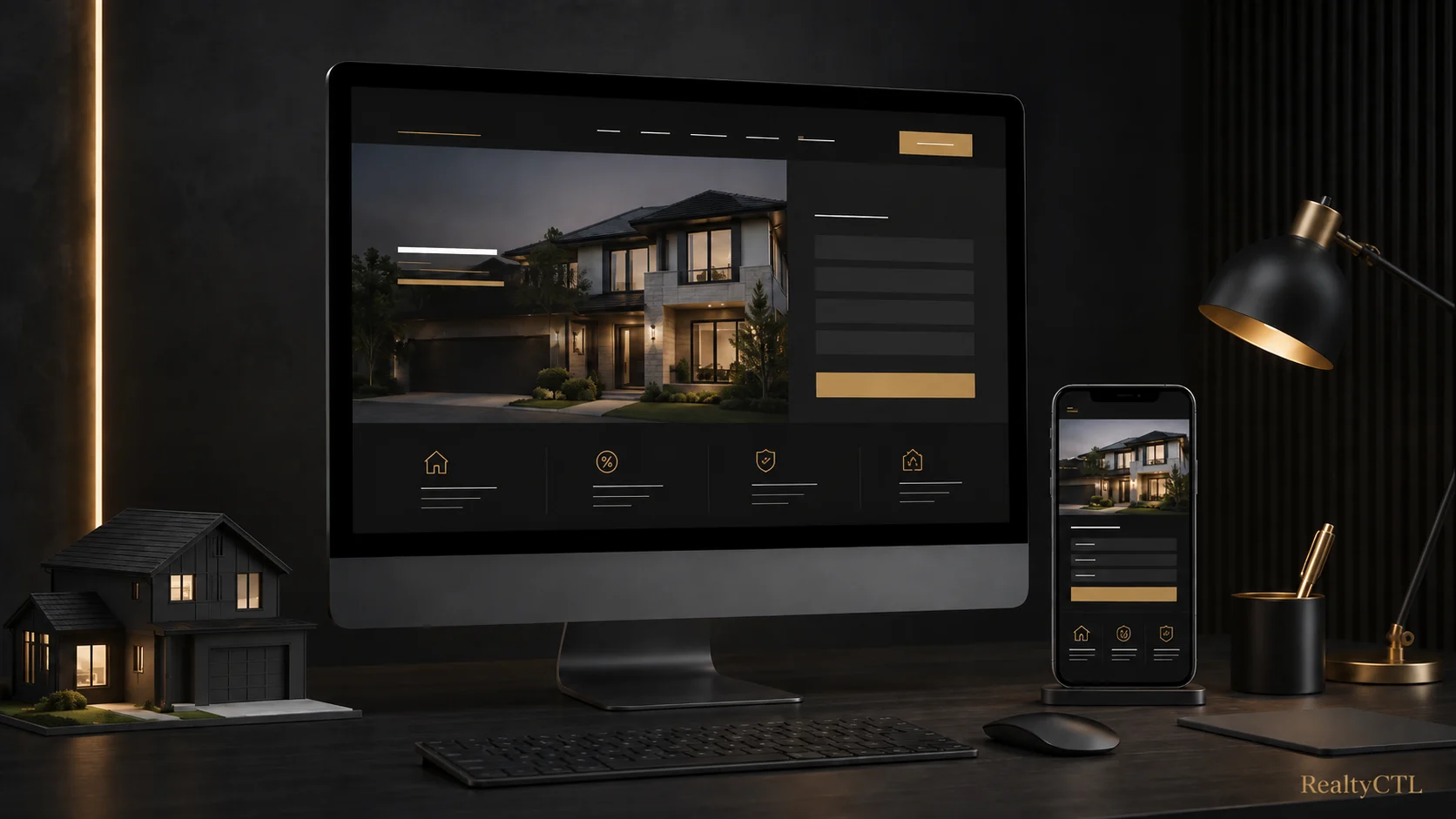
Mortgage Broker Website Design should do more than make a brokerage look modern. A useful website helps borrowers understand services, find relevant loan information, trust the team, and take a clear next step without confusion.
Many mortgage professionals already have a website, yet the site may be slow, generic, difficult to navigate, weak on mobile devices, or disconnected from follow-up. Visitors may arrive from search, advertising, social media, or a referral and still leave because the page does not match their intent.
A complete mortgage website connects positioning, site architecture, mortgage-specific content, responsive design, accessibility, local SEO, lead capture, appointment booking, CRM integration, analytics, trust signals, and compliance review. It should support purchase buyers, homeowners considering a refinance, first-time buyers, veterans, rural borrowers, referral partners, and past clients through relevant paths.
Website performance is not guaranteed. Results depend on the market, competition, domain history, brand strength, content quality, technical implementation, page speed, user experience, traffic source, offer, form design, follow-up, compliance review, and ongoing optimization.
What Is Mortgage Broker Website Design?
Mortgage Broker Website Design is the planning and creation of a digital experience for mortgage borrowers, homeowners, referral partners, and local prospects. It combines strategy, content, visual hierarchy, navigation, responsive UX, SEO, accessibility, lead capture, technology, trust, and measurement.
A generic business website may stop at a homepage, service summary, and contact form. A mortgage broker website usually needs loan-program education, geographic context, licensing details, secure application links, borrower resources, landing pages, and conversion tracking.
A landing page normally supports one audience, campaign, offer, and conversion action. A full website supports broader discovery, search visibility, multiple services, education, and trust.
A marketing website is also different from a borrower portal or secure application system. The website can explain options and help a visitor request a conversation. Sensitive application data and documents should move through approved secure systems rather than ordinary contact forms.
A CRM stores relationship history, source, stages, notes, and communication activity, but it does not replace the public website. A strong site sends page, offer, market, and topic context into the CRM.
RealtyCTL’s connected mortgage growth infrastructure brings website strategy, SEO, lead generation, CRM follow-up, appointments, and reporting into one organized system.
Build Your Mortgage Broker Website
Why Do Mortgage Broker Websites Fail to Generate Qualified Inquiries?
A mortgage website can look polished and still produce few useful conversations. Visual design cannot compensate for unclear positioning, thin content, confusing navigation, weak calls to action, or a follow-up process that starts too late.
Generic homepage copy is a common problem. Statements such as “We make mortgages easy” do not explain who the broker serves, which markets are covered, what support is available, or why a visitor should choose the team.
Another problem is trying to serve every audience on one page. A first-time buyer, a veteran researching VA financing, a homeowner considering cash-out refinancing, and a Realtor evaluating a referral partner have different questions. Each needs a relevant path.
Common website problems include:
- Visitors cannot identify the next step
- The homepage tries to serve every audience equally
- Loan-program pages repeat the same generic copy
- Location pages use only swapped city names
- Forms request too much information too early
- Phone numbers are difficult to tap on mobile devices
- The site does not explain what happens after submission
- Team expertise and licensing details are difficult to find
- Reviews appear without context or supporting information
- Several pages compete for the same search intent
- The CRM does not preserve lead-source or page-interest data
- Tracking counts submissions but not qualified conversations
More traffic does not repair a weak journey. Sending additional visitors to an unclear page may increase costs without improving borrower understanding or appointment quality.
The website should support the wider mortgage broker marketing strategy. Search, advertisements, social content, referral introductions, landing pages, forms, and first responses should communicate a consistent promise.
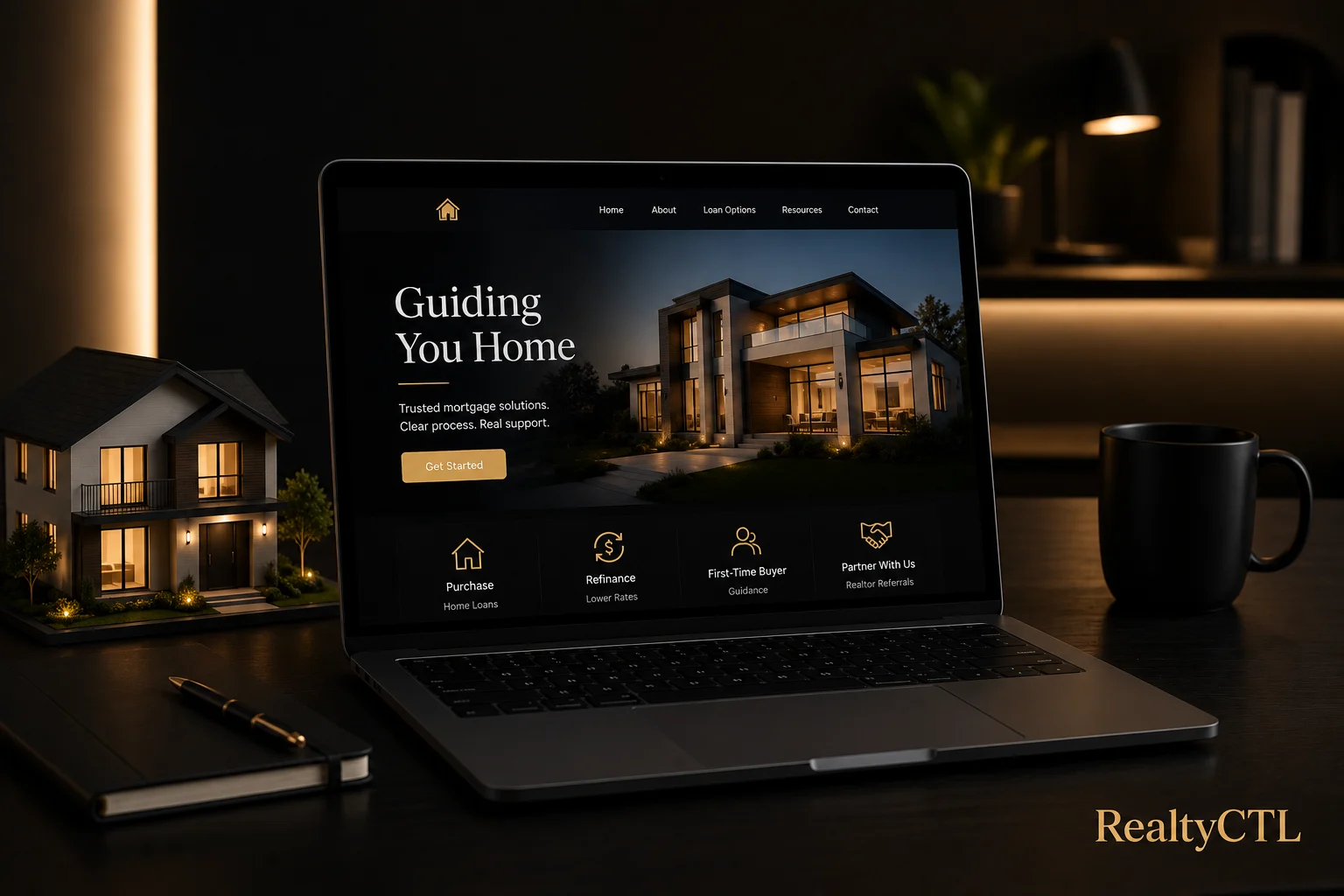
What Should a Complete Mortgage Broker Website Include?
A complete website begins with clear positioning. The visitor should quickly understand whom the broker serves, where services are available, which mortgage needs the team addresses, and what action to take next.
The site should provide a logical information architecture. Core pages may include a homepage, about page, team profiles, contact page, purchase and refinance pages, loan-program pages, first-time buyer resources, local market pages, a Realtor partner page, educational content, privacy information, and approved application links.
Responsive design should make navigation, reading, calling, form completion, and appointment booking practical on smaller screens. Accessibility should be considered through heading order, labels, contrast, keyboard navigation, focus states, error messages, alt text, and readable content.
Trust elements may include genuine team profiles, experience, licensing information, NMLS identifiers, service areas, process explanations, approved testimonials, reviews, contact information, and content that answers real borrower questions.
Conversion infrastructure may include phone CTAs, short inquiry forms, calendar booking, form confirmations, call tracking, CRM integration, email acknowledgment, approved SMS follow-up, and source reporting.
A mortgage website is valuable when it helps the right visitor find relevant information, trust the business, and take a clear next step.
The website should not stop working after submission. A useful inquiry event can create a CRM record, preserve the landing page and campaign source, identify the visitor’s stated interest, send an acknowledgment, create a follow-up task, and place the contact into an appropriate appointment or nurture path.
Which Pages Should a Mortgage Broker Website Have?
What Should the Homepage Accomplish?
The homepage should communicate the primary audience, service area, main value proposition, core services, trust signals, and next step. It should help visitors move toward the relevant page rather than attempting to answer every mortgage question in one place.
What Should the About and Team Pages Show?
About and team pages should make the business feel credible and human. They can explain experience, values, local knowledge, communication approach, licensing context, and the roles of genuine team members.
How Should Purchase and Refinance Pages Differ?
A purchase page should focus on buying timelines, pre-approval preparation, affordability questions, documentation, closing costs, and coordination with real estate professionals. A refinance page should address homeowner goals, costs, timing, equity, term changes, and the need for an individual review.
How Should Loan-Program Pages Be Structured?
FHA, VA, USDA, conventional, cash-out refinance, and other program pages should answer topic-specific questions. They should explain general purpose, possible considerations, process context, documentation themes, and next steps without implying that every visitor qualifies.
A VA page may discuss eligibility context, entitlement, occupancy, and the need to review individual circumstances. A USDA page may explain geographic and household considerations. An FHA page may discuss general down-payment, mortgage-insurance, and property topics. All program information should be reviewed for accuracy and freshness.
What Should First-Time Buyer Pages Explain?
First-time buyer content should simplify the order of the process. Useful topics include budgeting, credit preparation, pre-approval, down payments, closing costs, documents, home shopping, and communication with the mortgage and real estate teams.
What Should Local and Service-Area Pages Include?
Location pages should offer real market relevance rather than repeating one template with a different city name. They may include legitimate service availability, local buyer concerns, state or market context, relocation information, local team knowledge, and relevant internal resources.
What Should the Realtor Partner Page Communicate?
A referral-partner page can explain the broker’s borrower communication approach, educational resources, collaboration process, service areas, and contact path. It should avoid unsupported claims and should not imply prohibited referral compensation or arrangements.
How Should Mortgage Website Design Support Conversions?
Conversion-focused design reduces unnecessary friction while preserving enough context to route the inquiry correctly. The visitor should understand what will happen after clicking, calling, booking, downloading, or submitting a form.
A primary CTA represents the most important action on a page, such as booking a mortgage conversation. A secondary CTA offers another useful path, such as calling the team. An educational CTA may offer a buyer guide or checklist. An application CTA should send visitors to an approved secure system.
Forms should match the stage of the relationship. An initial marketing form may request a name, contact method, service area, general mortgage interest, and preferred next step. It should not collect Social Security numbers, bank statements, tax returns, or detailed financial records through an ordinary contact form.
Progressive forms can break a longer process into understandable steps, but adding steps does not automatically improve quality. Every field should have a business purpose, and the page should explain why the information is requested.
Mobile visitors need clear tap targets, click-to-call links, readable type, short forms, visible labels, useful spacing, and CTAs placed near relevant content. Sticky buttons can help in some designs, but they should not block content or create accessibility problems.
Trust signals work best near moments of decision. A team profile, licensing reference, review, process explanation, or privacy note may reduce uncertainty when placed beside a form or booking option.
A high-converting site should connect to a broader lead generation system for mortgage brokers rather than treating every submission as an isolated event.
Build Your Mortgage Broker Website
How Should Mortgage Broker Websites Be Optimized for SEO?
SEO should influence the website structure before design and development begin. Keyword research and search intent help define which pages are needed, how topics should be grouped, and which page should answer each major borrower question.
The Google SEO Starter Guide explains foundational concepts such as useful content, descriptive URLs, logical organization, internal links, titles, and crawlability. Current guidance should be checked during planning and after major site changes.
A mortgage website should use clean URLs, unique title tags, useful meta descriptions, one clear H1, logical question-based subheadings where appropriate, descriptive image alt text, internal links, canonical tags, an XML sitemap, and indexation controls.
Site architecture may group content around purchase mortgages, refinancing, loan programs, first-time buyers, local markets, mortgage education, and referral partnerships. Supporting articles should strengthen relevant service pages instead of competing with them for the same query.
SEO for mortgage brokers should connect search visibility with page relevance, lead capture, CRM source tracking, appointment paths, and follow-up. Ranking a page has limited business value when the visitor cannot understand the offer or take the correct next step.
A redesign should preserve useful URLs whenever practical. When a URL must change, the migration plan should map the old page to the most relevant new page, apply appropriate redirects, update internal links, preserve metadata where useful, and monitor crawl and indexation issues.
Website launch is not the end of SEO work. Search performance, indexation, content freshness, internal linking, competitor changes, technical errors, and conversion quality should be reviewed over time.
How Can Local SEO Support Mortgage Broker Website Design?
Local SEO connects mortgage services with legitimate geographic relevance. The website should clearly communicate the markets served without creating thin pages for every nearby city.
Local SEO for mortgage brokers may include useful location pages, Google Business Profile alignment, consistent business information, local reviews, market-specific content, local team information, and accurate tracking.
A strong local page may explain service availability, local home-buying concerns, relocation questions, state-specific process context, market education, and how to contact the appropriate team member. It should offer information that is genuinely useful to someone in that market.
Fabricated offices, misleading addresses, or pages created only by replacing city names can weaken trust and create quality risks. Each claimed location or service area should reflect the business’s real operations and licensing context.
Local content can support broader pages through internal linking and move visitors from market education to a relevant service page.
How Do Website Speed, Mobile UX, and Accessibility Affect Performance?
Technical performance affects whether users can access and use the website comfortably. A slow or unstable page can interrupt reading, form completion, and appointment booking, especially on mobile connections.
Current Google Web Vitals guidance provides a framework for evaluating loading, interaction responsiveness, and visual stability. Teams can use Google PageSpeed Insights as one diagnostic input, but tool scores should be considered alongside real user experience and business functionality.
Performance work may include image compression, modern image formats, caching, script reduction, font optimization, reliable hosting, controlled third-party tools, stable layouts, and careful loading of calculators, chat, tracking, or booking widgets.
Responsive design should be tested across different screen sizes and input methods. Navigation, menus, forms, phone links, buttons, calculators, and secure application links should remain practical on mobile devices.
Accessibility is part of website quality. The W3C Web Content Accessibility Guidelines overview covers principles and criteria for accessible web content, while the ADA web accessibility guidance provides U.S. government information about web accessibility and the ADA.
Practical considerations include keyboard navigation, logical focus order, sufficient contrast, descriptive labels, meaningful headings, visible error messages, alt text, captions, transcripts, and controls that do not rely only on color.
A checklist or automated overlay should not be presented as a legal guarantee. Qualified accessibility and legal professionals should review relevant requirements, risks, testing methods, and remediation priorities.
How Should a Mortgage Website Connect With CRM and Follow-Up?
A website inquiry should arrive with enough context for a relevant response. The CRM record may preserve the landing page, form name, traffic source, campaign, UTM values, location, stated loan interest, submission time, appointment status, and consent information where applicable.
Connected mortgage CRM workflows help the team organize source data, ownership, communication, tasks, and stages. The website and CRM should use consistent field names and routing rules so information does not become fragmented.
A purchase inquiry may require fast appointment options and pre-approval education. A refinance inquiry may need a different review path and longer nurture. FHA, VA, USDA, conventional, first-time buyer, and Realtor referral inquiries may each need relevant messages and assigned tasks.
Mortgage marketing automation can support acknowledgment, email nurture, permitted SMS communication, appointment reminders, no-show follow-up, long-term nurture, and database reactivation.
Automation should support the mortgage professional, not replace licensed guidance. AI and automated messages should not provide independent product recommendations, approval guidance, underwriting decisions, or unsupported pricing information.
The first follow-up should match the page that generated the inquiry. A visitor who requested a VA guide should not receive a generic refinance message. Message continuity helps the visitor remember the original reason for responding.
How Should Mortgage Brokers Measure Website Performance?
Website measurement should distinguish traffic, engagement, conversion, pipeline, technical, and quality indicators. Page views alone do not show whether the site produces useful business conversations.
Traffic metrics may include organic visits, local search visibility, paid traffic, referral traffic, page-level sessions, and mobile usage. Engagement metrics may include navigation paths, content interaction, form starts, and exits from important pages.
Conversion metrics may include phone clicks, form completions, calendar bookings, guide requests, secure application-path clicks, and application starts when accurately tracked. Pipeline metrics may include qualified conversations, appointment show rate, lead-source quality, CRM stage movement, and cost per qualified appointment.
Technical and quality metrics may include page performance, Web Vitals, indexation problems, broken forms, tracking failures, duplicate leads, accessibility issues, spam submissions, and incorrect source attribution.
Website improvement should draw from analytics, search performance, CRM outcomes, form data, user feedback, technical testing, content audits, and compliance review.
No universal benchmark applies to every mortgage website. Performance varies by market, competition, traffic source, offer, page quality, brand trust, follow-up, and the definition of a qualified opportunity.
Which Trust and Compliance Issues Should Mortgage Websites Address?
This section provides general education and is not legal, compliance, accessibility, cybersecurity, lending, mortgage, or financial advice. Website content and functionality should be reviewed by appropriate professionals before launch.
The site should present accurate company information, service areas, licensing context, NMLS identifiers, state availability, contact details, and required Equal Housing information where applicable. NMLS Consumer Access provides a public system for viewing information about licensed companies and professionals.
Audience language, imagery, forms, location pages, calculators, and marketing paths should reflect fair and inclusive practices. Review the HUD Fair Housing Act overview and CFPB Regulation B guidance when considering Fair Housing, fair lending, ECOA, discouragement, and consistent treatment.
Realtor partner pages, co-marketing content, settlement-service references, and referral-related messaging should receive review with the CFPB Regulation X guidance in mind.
Rate, payment, cost, credit-term, and savings claims may create additional advertising requirements. Website copy, calculators, examples, and disclosures should be reviewed against the CFPB Regulation Z guidance and applicable company and state requirements.
Forms should explain what information is requested and how it will be used. Consent language for calls, text messages, email, cookies, tracking, or other communication should match the actual process and current requirements. Opt-out methods should function across connected systems.
Privacy and security considerations include HTTPS, secure application links, access controls, third-party scripts, data minimization, vendor review, retention, and incident response. A public marketing form should not be used as a substitute for an approved secure borrower portal.
Testimonials and reviews should be genuine, presented accurately, and reviewed for required disclosures or context. Calculators should explain their limitations and avoid implying that an estimate is an approval, offer, rate commitment, or personalized financial recommendation.
What Should You Look for in a Mortgage Website Design Partner?
A website partner should understand both web strategy and mortgage-specific business requirements. Attractive design matters, but the partner should also be able to explain information architecture, borrower intent, local search, content quality, conversion paths, integrations, measurement, migration, maintenance, and compliance review.
Evaluate experience with:
- Mortgage audience and service positioning
- Responsive UX and accessible design practices
- SEO architecture and local search strategy
- Mortgage content and loan-program pages
- Conversion copy and landing pages
- Lead forms and secure application paths
- CRM and appointment-booking integrations
- Call, form, campaign, and pipeline tracking
- Website migrations and redirect planning
- Performance testing and Core Web Vitals
- Content ownership and future editing
- Hosting, maintenance, backups, and security responsibilities
- Compliance-aware review processes
- Realistic expectations without ranking or lead guarantees
A strong partner should ask which audiences, markets, and loan programs matter most; what action each page should support; which CRM receives inquiries; how source data will be preserved; which secure application system is approved; who reviews compliance; and how success will be measured.
The project scope should define ownership of the domain, website, content, analytics, forms, integrations, and maintenance, plus how updates, backups, support, and reporting will work.
RealtyCTL may fit mortgage professionals who want website strategy connected with SEO, lead capture, CRM follow-up, appointment booking, reporting, and broader growth infrastructure.
Build Your Mortgage Broker Website
What Questions Do Mortgage Brokers Ask About Website Design?
What Is Mortgage Broker Website Design?
Mortgage Broker Website Design combines mortgage-specific strategy, content, UX, responsive development, SEO, accessibility, lead capture, CRM integration, trust signals, analytics, and compliance-aware review. Its purpose is to help relevant visitors understand the business and take an appropriate next step.
What Pages Should a Mortgage Broker Website Include?
Common pages include a homepage, about page, team profiles, contact page, purchase page, refinance page, loan-program pages, first-time buyer resources, local pages, Realtor partner information, educational content, privacy information, and secure application links.
How Much Does a Mortgage Broker Website Cost?
Cost depends on scope, page count, custom design, content, integrations, SEO, accessibility work, migration needs, tracking, hosting, maintenance, and compliance review. A template-based project and a custom growth platform have different requirements and budgets.
How Can a Mortgage Website Generate Leads?
A mortgage website may generate inquiries by matching pages to borrower intent, building trust, attracting suitable traffic, presenting useful offers, reducing form friction, providing appointment options, and connecting each inquiry to organized follow-up.
Should a Mortgage Broker Website Connect to a CRM?
CRM integration can preserve source, page, campaign, interest, ownership, appointment, and communication data. This helps the team respond with relevant context and measure what happens after a visitor submits a form or books a conversation.
Should Mortgage Brokers Hire a Website Design Partner?
A partner may be useful when the business needs strategy, design, development, mortgage content, SEO, integrations, migration support, analytics, or maintenance. The partner should understand mortgage workflows, define responsibilities clearly, and avoid guaranteed outcomes.
This content is for general mortgage website, SEO, UX, and marketing education. It is not legal, compliance, accessibility, cybersecurity, lending, mortgage, or financial advice.
Website pages, forms, calculators, application links, reviews, claims, consent language, privacy practices, licensing statements, and accessibility should be reviewed before launch. Required company, licensing, NMLS, consent, privacy, fair lending, advertising, and disclosure language should be included where applicable.
Website, SEO, and lead-generation performance are not guaranteed. Results depend on the market, competition, domain history, content quality, technical implementation, UX, page speed, traffic source, offer, CRM integration, follow-up, compliance review, and execution.
Last Updated: 27th June 2026
Reviewed By: Atiq Md Rezaul Hoque Turjo
Written By

Atiq Rezaul Hoque Turjo
Founder & CEO, NextCTL
Software architect with 16 years of experience, founder and CEO of NextCTL, and the builder behind the CTL stack: BackCTL, H22T and RealtyCTL.