
Listing Photo Copyright in 2027: NAR's New MLS Policy
In November 2026 NAR approved an optional MLS copyright policy and new data-use rules. Here is what they mean for the listing photos and copy you market with in 2027.
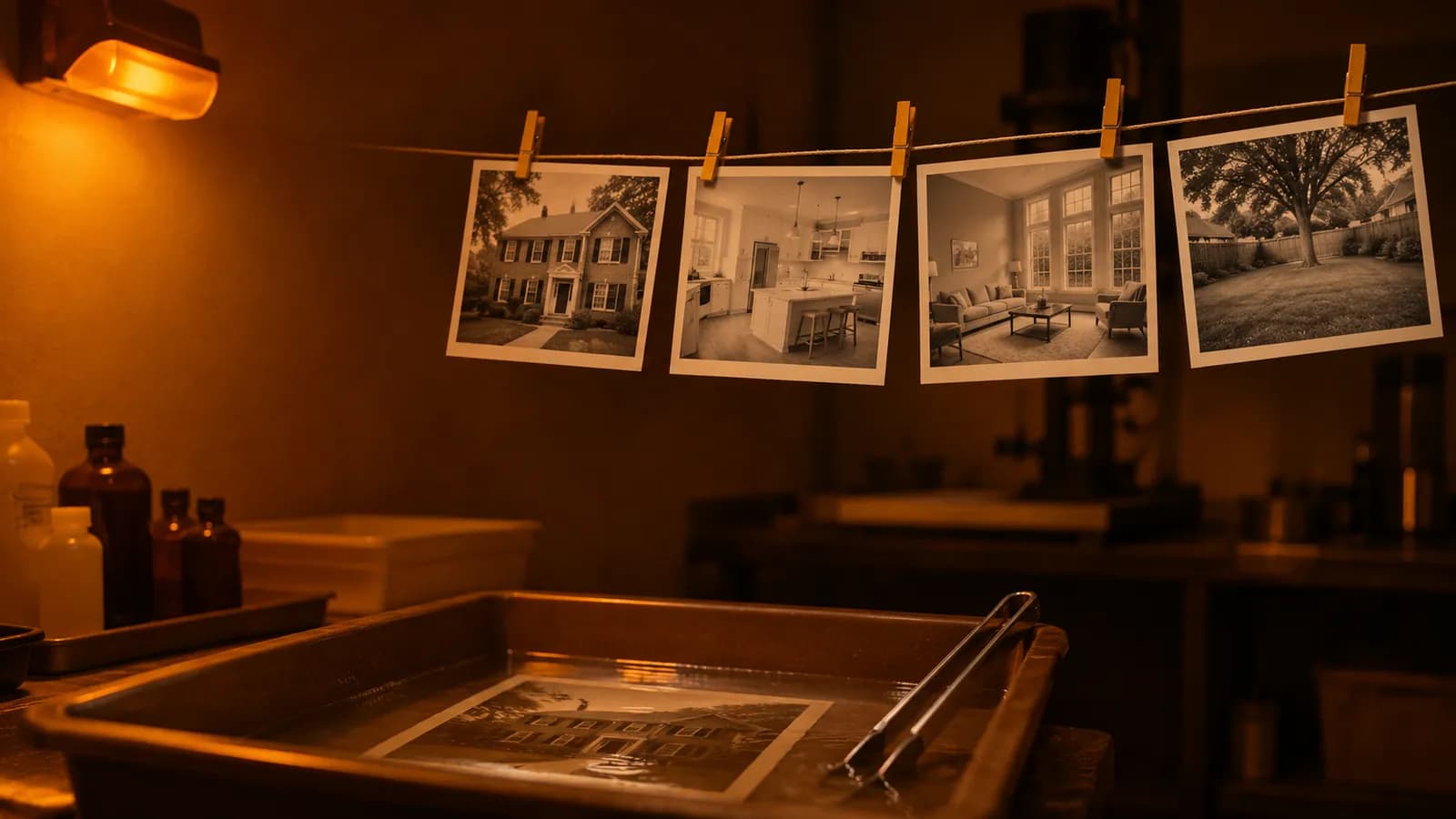
You paid for the listing photos. Does that mean you own them?
Not necessarily, and a new National Association of REALTORS® (NAR) policy could make the difference matter more in 2027.
Listing photo copyright generally belongs to the person who created the image, unless a work-made-for-hire arrangement or a signed transfer says otherwise. On November 8, 2026, NAR approved an optional MLS copyright policy that lets an MLS ask for a partial copyright interest in certain listing content. Whether it affects you depends on your local MLS and your agreements.
For agents and team leads, the job now is to know which content you own, which you only have permission to use, and what your MLS may ask for.
Who owns listing photos under U.S. copyright law?
Paying someone to create a photo does not, by itself, transfer its copyright to you.
The U.S. Copyright Office's Copyright Basics circular explains that copyright exists automatically once an original work is fixed in a tangible form. Photos, videos and original written listing descriptions all qualify. The copyright initially belongs to the author who created the work, with two main exceptions:
- Work made for hire: a work created by an employee as part of their regular duties, or certain specially commissioned works covered by an express written work-for-hire agreement, belongs to the hiring party.
- Transfer: the owner can transfer some or all rights, but a transfer of ownership generally must be in writing and signed by the owner.
The circular also notes that owning a copy of a work does not give you the copyright in it. Registration is not required for protection, but for U.S. works it is generally needed before you can file an infringement suit.
So who owns listing photos? Usually the photographer. Your payment may buy permission to use the images for the listing, and your agreement may allow MLS uploads, flyers and social posts while restricting other uses. That is why real estate photo copyright should be settled before the shoot, not after a disagreement. The same applies to commissioned video, floor plans and written marketing.
What did NAR approve on November 8, 2026?
NAR approved four MLS policy recommendations at NAR NXT 2026, covering copyright protection, data feeds, permitted uses of MLS data and MLS Committee qualifications. The NAR announcement and NAR's Real Estate News explainer set out the details.
1. An optional MLS copyright policy. This revises MLS Policy Statement 7.85. An MLS that adopts it may require an ownership interest of up to 50% in the copyright of certain listing content, to strengthen copyright protection and enforcement, subject to quarterly copyright registration requirements. MLSs must give participants the opportunity to opt out, and brokers keep the ability to independently use and license their own listing content. A partial copyright interest is not the same as permission to display a photo, so know what rights you hold before granting any to someone else.
2. An optional MLS data feed policy. MLSs get more flexibility to set local eligibility and licensing requirements for certain data feeds, as long as they are reasonable, objective and applied equally to all participants. Participants keep access to MLS listing information and data feeds of their own listings. This could matter for broker websites, IDX services and marketing platforms that rely on MLS data.
3. A data-use policy. MLS data must be used in line with applicable participation or data licensing requirements, and for purposes related to real estate brokerage services, appraisals or other property valuations. The purpose of an integration matters, not just whether a platform can technically reach the feed.
4. MLS Committee qualifications. Updated criteria for serving on NAR's MLS Committee. This is a governance change, not a content-ownership rule for agents.
When does the NAR MLS policy 2026 package take effect? NAR's pages give no single nationwide date. The copyright and data feed policies are optional, and each MLS decides whether and when to adopt them. Do not assume every MLS will ask for a copyright interest in 2027.
What should you check in your photographer agreement before 2027?
Start with the agreement you already use. If your photographer sends a booking confirmation and an invoice but no licensing terms, ask before the next shoot. Six questions to answer:
- Who owns the original photos? Does the photographer keep the copyright, or does your agreement transfer it?
- What may you do with them? MLS, listing portals, social media, paid ads, print and brokerage websites? Tie the answer to your real estate social media marketing plan so posts stay within the license.
- Can you reuse them after the sale? In a portfolio, a sold announcement or a later campaign?
- Can you grant an MLS a partial copyright interest? Permission to upload a photo is not permission to transfer part of its copyright.
- How long does the license last? Until the listing ends, the home sells, or another date?
- What happens if the listing moves to another brokerage? Do the rights follow the property, or stay with the original agent or broker?
These matter most for teams working with several photographers and vendors. This article is general information, not legal advice. Ask your broker, your MLS and an attorney about the rights and requirements in your situation.
Need your listing content, website and marketing workflows to line up? Book a strategy call with RealtyCTL.
Do listing descriptions, floor plans and videos raise the same questions?
The principle is the same: identify the creator and what rights were granted. The details differ by content type. Circular 1 says copyright does not protect ideas, titles, short phrases or mere listings of contents. A description with original wording may be protected; a bare list of features may not be. Floor plans can raise their own questions about originality.
| Listing content | Usually owned by | What NAR's optional policy could add | What to check |
|---|---|---|---|
| Listing photos | The creator, unless a contract says otherwise | A partial copyright interest for an adopting MLS | Ownership, marketing license, right to grant an interest |
| Drone photos and video | The creator, unless a contract says otherwise | Possible inclusion if it is covered listing content | Video rights, drone contractor agreement, reuse |
| Floor plans | Depends on your contract | Possible rights questions if protected content is included | Who created it, licensing scope |
| Listing description | The creator, unless a contract says otherwise | A possible partial interest in original written content | Who wrote it, ownership, reuse permission |
| Virtual staging edits | Depends on your contract | Questions about edited versions of licensed photos | Original photo license, editing permission |
| MLS data feeds | Depends on your contract | Local feed eligibility and licensing rules | Feed agreement, access rights, permitted uses |
The optional policy does not make every piece of listing information copyrightable.
Virtual staging adds another layer. You may have permission to edit a photographer's image without owning it, and you still need to think about how edited images are presented to buyers. Our virtual staging disclosure guide covers that side. For teams producing descriptions, video and photos together, a documented real estate content marketing process keeps permissions consistent across channels.
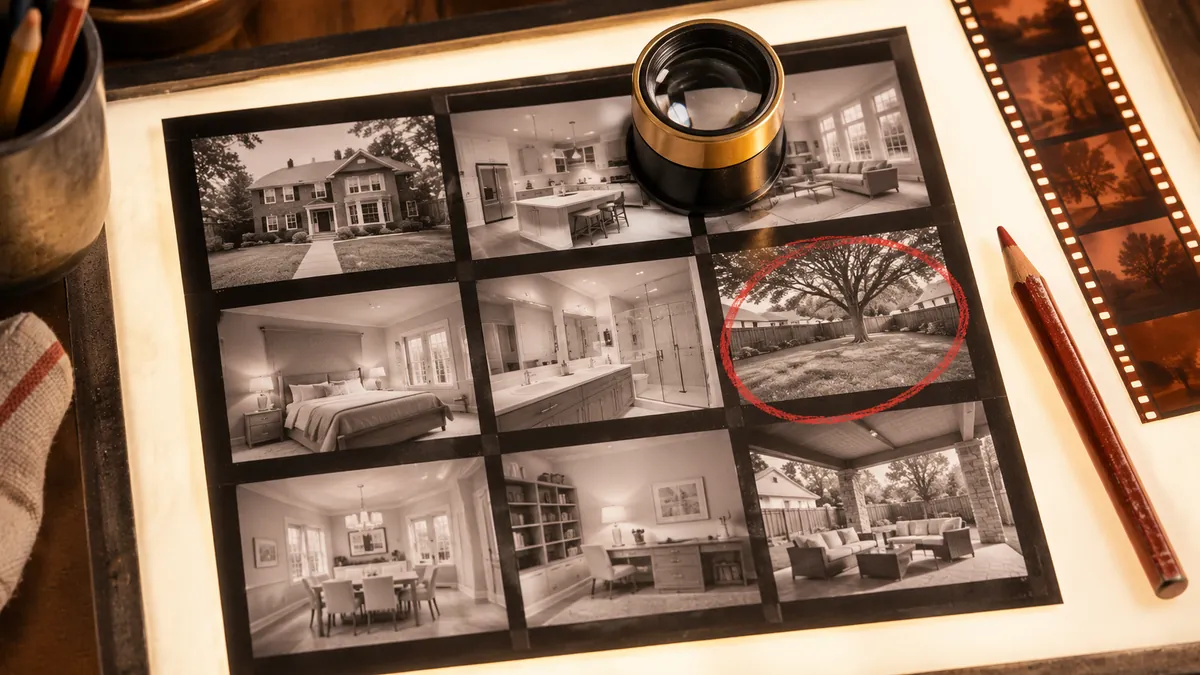
Review image selection and licensing permissions before distributing listing photography.
How could the new MLS data feed policy affect your marketing stack?
Listing marketing rarely stops at the MLS. A typical brokerage runs a website, IDX, a CRM, email and several marketing tools. Some receive MLS data directly; others get it through vendors. The MLS data feed policy lets MLSs set local eligibility and licensing requirements, and the data-use policy ties every use back to participation and licensing agreements.
Things to verify:
- IDX and VOW websites: do data access and display follow your MLS agreements?
- CRM integrations: does the CRM receive MLS data through an authorized feed, and for what uses?
- Marketing automation: may the platform retrieve, store, transform and redistribute the listing data it uses?
- Third-party vendors: who holds the feed license, what data does the vendor receive, and does its use fit the permitted purposes?
- Feeds of your own listings: NAR's feed policy preserves participants' access to these, but other licensing terms can still apply.
Our article on Zillow listing access standards covers a separate listing-distribution change worth knowing alongside this one. The aim is simple: do not build a marketing workflow on data access your agreements do not allow.
Can you upload MLS photos and descriptions into AI tools?
Not automatically. Before uploading listing images or descriptions to a third-party AI writing, design or video tool, check your photographer's license and your MLS's data-use and licensing terms. Permission to publish content on a listing page does not necessarily cover sending it to another service for processing or reuse. Ask what the tool stores and whether it may reuse what you submit, and keep a human review before anything generated or edited is published.

One listing photograph can involve multiple parties with different rights to use it.
What should agents and team leads put on their 2027 checklist?
You do not need to redesign every workflow at once. Start by documenting what you use and where your permissions come from.
- [ ] Ask your MLS whether it plans to adopt the optional copyright policy, and when.
- [ ] Ask whether it has adopted or proposed new data feed eligibility and licensing rules.
- [ ] Review photographer agreements for ownership and licensing terms.
- [ ] Confirm licenses cover MLS, website, social, paid ads and print.
- [ ] Check whether your contracts let you grant an MLS a partial copyright interest.
- [ ] Check your reuse rights after a sale or a brokerage change.
- [ ] Record who creates and owns descriptions, floor plans and edited images.
- [ ] Review IDX, VOW, CRM and marketing vendor agreements for permitted MLS data uses.
- [ ] Set an approval step before licensed listing content goes into third-party tools.
- [ ] Keep contracts, licenses and MLS notices in one shared place.
Team leads should assign one person to this review rather than leave each agent to interpret vendor agreements alone. A simple record per property can list the creator, the license, permitted channels, expiry and open questions. The point is to avoid finding a permissions problem after content is already out.
Review your listing content rights before 2027
NAR's November 2026 decisions are a reason to review your content rights, not a sign that every MLS has the same new rules. Clarify photographer agreements, document ownership, check data feed permissions and watch for local MLS announcements. RealtyCTL helps agents and teams build listing marketing, lead generation and automation around the systems they actually use.
Book a strategy call to review your listing marketing workflow for 2027.
FAQ
Who owns listing photos, the agent or the photographer?
Usually the photographer, because copyright initially belongs to the person who created the work. That changes only if a valid work-made-for-hire arrangement applies or the photographer signs a written transfer. Paying for a shoot does not transfer copyright by itself; your contract may instead grant specific marketing permissions. Check it for ownership, permitted uses, duration and whether rights can be passed on.
What is NAR's new MLS copyright policy?
Approved on November 8, 2026, it revises MLS Policy Statement 7.85. An MLS that chooses to adopt it may require an ownership interest of up to 50% in the copyright of certain listing content, subject to quarterly copyright registration requirements. Participants must be able to opt out, and brokers keep the right to use and license their own content. Local adoption is optional.
Can I opt out of giving my MLS a copyright interest?
Under NAR's policy, an MLS that adopts it must give participants the opportunity to opt out of assigning a copyright interest. Ask your MLS how that would work locally, including any procedure or deadline. Do not assume your MLS has adopted the policy or that an opt-out process already exists; read the actual local policy before you decide.
Can I reuse listing photos after a sale?
That depends on your ownership or license terms. Some photographer agreements allow ongoing portfolio and marketing use; others limit images to one listing or campaign. A completed sale does not give the agent any extra copyright rights. Before using photos in sold posts, ads or future promotions, check that your license covers that specific use.